LiFePO4 energy storage supplier since 2018 · OEM/ODM supported
[email protected] English · USD / EUR / GBP / AUD / CAD
0%

Industrial energy storage is moving from a backup purchase to a carefully engineered operating asset. In 2026, an Industrial Energy Storage System may support peak shaving, renewable integration, frequency control, or emergency continuity. The right choice depends on load profiles, discharge duration, ambient conditions, space, maintenance skills, and connection requirements. Lithium-ion systems remain practical for fast response and modular deployment. Flow batteries can suit longer, repeated cycling where footprint is acceptable. Sodium-ion systems are attracting attention for material flexibility and lower-temperature resilience. Thermal storage, compressed-air systems, and hydrogen-based solutions may serve facilities with distinctive heat, pressure, or seasonal needs.

The technology label is only the beginning. A credible evaluation should examine measured efficiency, cycle-life assumptions, degradation records, warranty limits, fire protection, controls, and end-of-life planning. Site experience matters. A battery beside a dusty cement line faces different risks from one serving a refrigerated warehouse. Engineers should compare real fifteen-minute demand data with simulated annual performance, rather than trusting a generic brochure. Safety depends on design, installation, monitoring, training, and local compliance. Vendor claims deserve questions.

Some decisions remain imperfect. No system wins everywhere. Project teams may also underestimate controls, grid studies, or replacement costs. That weakness is worth admitting early. This guide compares major 2026 Industrial Energy Storage System types through practical performance, operational evidence, and lifecycle considerations. It aims to help owners ask sharper questions, avoid fashionable shortcuts, and select storage that remains useful under changing operating conditions.
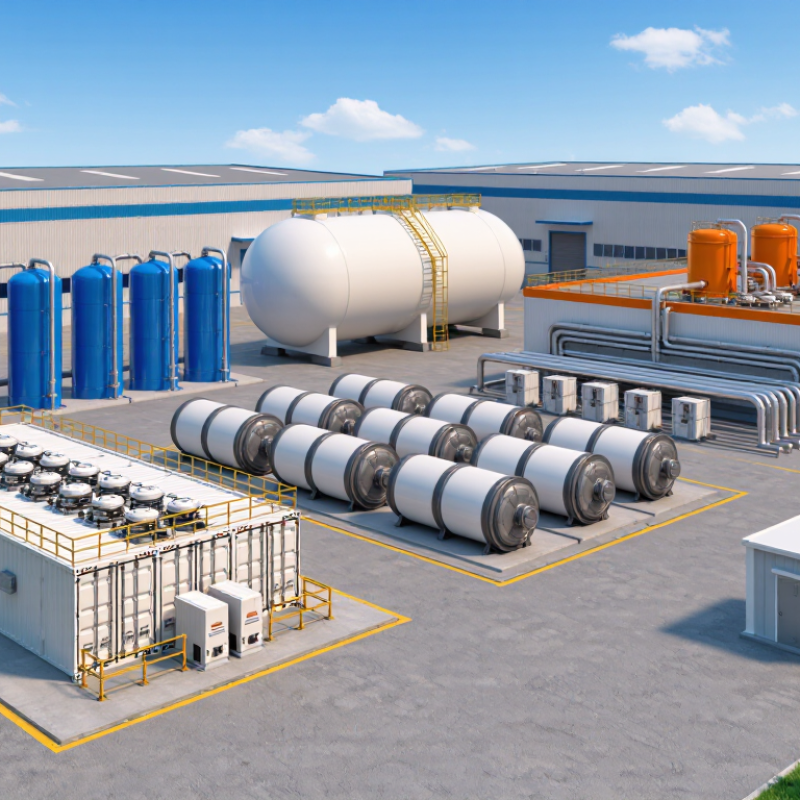
2026 Top Industrial Energy Storage System Types

What Defines an Industrial Energy Storage System?

What Defines an Industrial Energy Storage System?

An industrial energy storage system is an engineered asset built for demanding power operations. It does more than store electricity. The defining feature is integration. A complete system links battery modules, power conversion equipment, thermal controls, monitoring software, and safety protection. These parts must operate together under changing loads, temperatures, and grid conditions.

Industrial systems usually serve factories, warehouses, utilities, mines, and large commercial sites. Their capacity may reach several megawatt-hours, but size alone does not define them. A smaller installation can still be industrial when it supports high-voltage equipment, automated controls, and formal maintenance procedures. During site assessments, engineers examine ramp rates, discharge duration, cycle frequency, and available space. They also check ventilation, emergency access, fire detection, and connection requirements. Small details matter. A blocked service path can delay maintenance.

Reliable operation depends on more than battery chemistry. The energy management system must coordinate demand reduction, backup power, renewable generation, and grid services. The battery management system tracks cell voltage, temperature, and state of charge. Power conversion equipment must respond quickly without creating unstable electrical conditions. Industrial systems also require clear data records and trained operators. Capacity figures can be misleading. They may ignore degradation, extreme weather, or limited export capacity. This definition remains imperfect, because every facility has different risks, processes, and operating priorities.

How Industrial Energy Storage Systems Work

Industrial energy storage systems work by shifting electricity across time. During low-demand hours, batteries, thermal stores, or compressed-air units absorb power from the grid or onsite renewables. A power-conversion system changes electricity between AC and DC. The battery management system monitors voltage, temperature, and cell balance.

An energy management system then decides when to charge or discharge. It may respond to production schedules, electricity prices, grid signals, or frequency changes. For example, a factory can charge at night and discharge during a sharp afternoon demand peak. Lithium-ion systems provide fast response, while flow batteries can support longer discharge periods. Thermal storage can hold heat or cooling for industrial processes.

The International Energy Agency reported nearly 42 GW of new battery storage capacity in 2023, almost twice the previous year’s additions. Its 2024 Batteries and Secure Energy Transitions report also identifies grid flexibility as a major reason for this growth. However, capacity alone does not guarantee dependable operation. Forecasts can miss sudden load changes. Sensors can drift. Heat management remains critical in dense installations.

Real-world commissioning should include measured round-trip efficiency, response time, degradation, and emergency controls. These figures often differ from laboratory claims. A practical system is not simply a large battery. It is a coordinated balance of cells, converters, software, cooling, protection, and trained operators.

Main Types of Industrial Energy Storage Systems in 2026

In 2026, industrial energy storage systems will serve different operating problems, not one universal market. Lithium-ion battery systems remain widely used for peak shaving, frequency regulation, and solar shifting. The International Energy Agency reported 42 GW of battery storage additions in 2023, more than doubling the previous year. These systems respond quickly and fit compact sites. However, thermal management, fire protection, and degradation require disciplined engineering. Cheap capacity is not always cheap operation.

Flow batteries suit facilities needing longer discharge periods and frequent cycling. Their liquid electrolytes can provide extended duration, but tanks require valuable space. Pumped hydropower and compressed-air storage support grid-scale applications, while flywheels handle brief, high-power events.

Thermal storage uses molten salts, solid materials, or chilled water for industrial heat and cooling. It can reduce electrical demand without converting every energy unit back into electricity. Hydrogen storage may support seasonal balancing, although its round-trip efficiency remains a serious weakness. That detail is often softened.

The U.S. Department of Energy’s Long Duration Storage Shot targets a 90% cost reduction for systems lasting 10 hours or longer by 2030. Lazard’s 2024 Levelized Cost of Storage analysis also shows that costs vary sharply by duration, efficiency, and utilization. Site experience suggests another issue: storage sizing often follows optimistic load forecasts. A battery may look excellent on paper, then face dust, heat, irregular production, and weak grid connections.

How to Compare Industrial Energy Storage Technologies

Comparing industrial energy storage technologies requires more than checking price per kilowatt-hour.

Start with the operating task. A 10 MW battery serving a factory for four hours needs different design logic from a system storing summer solar energy for several days. Lithium-ion systems respond within milliseconds and suit frequency control, peak shaving, and short backup periods. Flow batteries offer longer discharge durations and less fire exposure, but their tanks require physical space. Pumped hydro can provide large-scale storage, yet it needs suitable terrain and lengthy construction.

The 2024 International Energy Agency report Batteries and Secure Energy Transitions projects global battery storage capacity must reach about 1,200 GW by 2030.

That figure signals rapid deployment, not universal suitability. Compare round-trip efficiency, degradation, cycle life, response time, safety controls, and replacement schedules. The 2024 Levelized Cost of Storage Analysis also shows costs vary sharply by duration and application. A cheaper four-hour system may become expensive when daily cycling accelerates degradation.

Site conditions matter.

Measure available land, grid limits, ambient temperature, water access, and emergency response distances. Thermal storage can use industrial heat directly, avoiding unnecessary electricity conversion. Hydrogen may support longer storage, but its lower round-trip efficiency deserves careful scrutiny.

A neat comparison is tempting, but it can mislead. Real operating data from similar facilities should outweigh optimistic laboratory figures. Forecasts also change. That uncertainty should remain visible in the investment model.

Industrial Applications and Selection Criteria for 2026

2026 Top Industrial Energy Storage System Types

Industrial energy storage is moving beyond simple backup power. Facilities now use batteries to reduce peak demand, support renewable generation, and stabilize sensitive equipment. Lithium iron phosphate systems suit warehouses, factories, and data centers because they offer strong cycle life and predictable thermal behavior. Sodium-ion systems may fit colder sites or projects seeking alternative material supply chains. Flow batteries remain attractive for long-duration storage, especially where daily discharge lasts several hours.

Selection should begin with the application, not the technology label. A factory with sudden motor loads needs high power and fast response. A solar-powered processing plant may need greater energy capacity after sunset. Check usable capacity, round-trip efficiency, response time, cycle depth, and expected operating temperature. Space matters too. A compact indoor room requires different ventilation, fire protection, and monitoring than an outdoor container yard.

Field experience shows that installation details often decide performance. Dust, humidity, cable distance, and maintenance access can change the original design assumptions. Safety studies should address thermal events, isolation procedures, emergency access, and applicable local standards. A technically impressive system can still underperform when control software ignores production schedules. I would also question optimistic payback estimates. Electricity prices change, and batteries gradually lose capacity. Conservative modeling is less exciting, but usually more credible. One overlooked detail? End-of-life replacement planning.

2026 Top Industrial Energy Storage System Types

Industrial applications and selection criteria based on typical discharge-duration requirements

How to interpret the chart: The bars show typical continuous discharge-duration ranges for industrial-scale energy storage systems. Lithium-ion systems are commonly selected for fast-response peak shaving, backup power, and frequency regulation. Flow batteries are suited to longer-duration cycling, while pumped hydro and compressed-air storage are generally considered for large-scale, long-duration applications. Thermal storage is often selected where the industrial load is heating or cooling rather than electricity.
Indicative engineering ranges; actual performance depends on system design, operating conditions, energy-to-power ratio, site constraints, and project economics.

FAQS

What is an industrial energy storage system?

It is an engineered system for storing and releasing electricity. It combines batteries, converters, cooling, monitoring, and safety controls. Size alone does not define it.

Which facilities use industrial energy storage?

Factories, warehouses, mines, utilities, and large commercial sites commonly use these systems. Smaller sites may qualify when they support high-voltage equipment and formal maintenance.

How does an industrial storage system shift electricity?

It charges during low-demand periods and discharges during expensive or demanding periods. A factory might charge at night and support afternoon production peaks.

What does the energy management system control?

It schedules charging and discharging. It can respond to production plans, electricity prices, renewable output, and grid signals. Forecasts can still be wrong.

What does the battery management system monitor?

It tracks cell voltage, temperature, balance, and state of charge. These readings help prevent unsafe operation and reduce avoidable battery damage.

Which storage technologies suit different operating needs?

Lithium-ion systems provide fast response and compact installation. Flow batteries support longer discharge periods. Flywheels suit brief, high-power events. Thermal storage can hold cooling or industrial heat.

What site details should engineers inspect?

They should check load changes, discharge duration, cycle frequency, ventilation, emergency access, fire detection, and grid connections. A blocked service path can delay maintenance.

How should system performance be verified?

Commissioning should measure efficiency, response time, degradation, and emergency controls. Laboratory results may look better than field performance. Heat, dust, and irregular production matter.

Conclusion

An Industrial Energy Storage System is a large-scale solution designed to store electricity and deliver it when industrial facilities need it most. These systems help balance supply and demand, improve power quality, reduce peak electricity costs, and support more reliable operations. They typically charge from the grid or on-site generation, retain energy through chemical, mechanical, thermal, or electrical processes, and discharge it through power conversion equipment when required.

In 2026, major system types include battery storage, pumped hydro, compressed air, flywheels, thermal storage, and hydrogen-based storage. Each technology differs in response speed, capacity, duration, efficiency, safety, maintenance needs, environmental impact, and total cost. Effective comparison should consider operating conditions, project lifespan, available space, grid requirements, renewable integration, and scalability. Industrial applications range from manufacturing and data centers to mining, logistics, and microgrids, so the best choice depends on load patterns, reliability targets, expansion plans, and local energy conditions.

Evelyn

Evelyn

Evelyn is a dedicated marketing professional with a strong understanding of the company’s products, customers, and industry landscape. With a thoughtful, research-driven approach, she translates complex product capabilities into clear, practical insights that help readers make informed decisions.......