China has become a major manufacturing base for commercial battery energy storage systems, known as BESS. Its suppliers serve factories, logistics parks, offices, data centers, and renewable energy projects. Yet supplier visibility can be misleading. A strong brand does not guarantee the best fit for every site. This guide examines China’s leading Commercial BESS suppliers through practical buying criteria.
The review considers battery chemistry, usable capacity, power rating, thermal management, safety testing, software, warranties, and service coverage. It also assesses integration experience, project references, delivery consistency, and lifecycle support. Companies such as CATL, BYD, Sungrow, HyperStrong, EVE Energy, and Trina Storage frequently appear in industry discussions. Their product ranges and market roles differ. Some focus on battery cells. Others deliver complete systems. That distinction matters. A twenty-foot container may look impressive, but controls, installation quality, fire protection, and maintenance often determine real performance. A system designed for peak-demand reduction may not suit a site requiring four-hour backup.
Reliable comparison requires more than brochures or shipment rankings. Buyers should verify certifications, bankability evidence, degradation assumptions, response times, and local technical support. Published specifications can change between product generations. Warranty language may also hide limits on cycling, temperature, or available capacity. I will separate documented strengths from reasonable but unproven claims. The analysis is not perfectly final. Supplier data may be incomplete, and regional service quality can vary. Still, a transparent framework helps commercial buyers narrow choices and ask sharper questions before signing a contract.
What Is a Commercial BESS and Why Does China Lead Its Development?
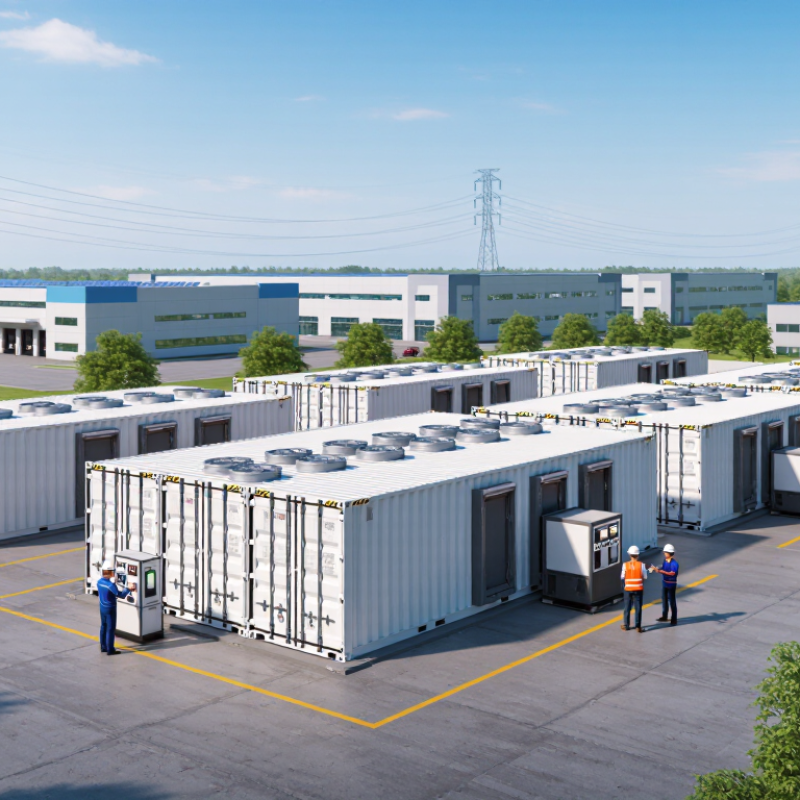
A commercial BESS is a battery energy storage system for factories, offices, warehouses, and commercial power sites. It stores electricity when prices or demand are low, then releases it during peak periods. Systems may also support solar power, backup supply, and grid balancing. Unlike household batteries, commercial units often combine battery containers, power conversion equipment, thermal management, software, and safety controls.
China leads this sector because its battery manufacturing chain is highly integrated. It has strong access to cells, materials, electronics, and large-scale engineering capacity. China’s National Energy Administration reported more than 31 GW of new energy storage capacity by the end of 2023. The International Energy Agency also states that global battery storage capacity must expand substantially before 2030 to support clean power growth. Cost advantages matter, but they do not explain everything. Local deployment experience and industrial policy also accelerate development. The picture is not perfect. Rapid expansion can create challenges in quality control, recycling, fire protection, and long-term performance.
Tips: When comparing commercial BESS suppliers, check usable capacity, cycle warranty, round-trip efficiency, response time, safety testing, and software support. Ask for field data, not only laboratory results. A low purchase price may hide replacement costs, integration delays, or weaker after-sales service. Suppliers with strong engineering records should explain degradation clearly. That transparency is often more valuable than impressive capacity figures.
| Supplier Category | Typical Offering | Common System Scale | Main Commercial Applications | Typical Technical Characteristics | Key Selection Criteria |
|---|---|---|---|---|---|
| Commercial BESS Definition and Supplier Segmentation | |||||
| Integrated BESS manufacturers | Containerized systems combining battery racks, battery-management systems, power-conversion systems, thermal management, fire protection, and energy-management software. | Approximately 1 MW to more than 100 MW; project energy capacity commonly ranges from 2 MWh to several hundred MWh. | Peak shaving, demand-charge reduction, renewable-energy integration, backup power, and energy trading. | Lithium iron phosphate chemistry is widely used because of its thermal stability, cycle life, and suitability for stationary storage. | Round-trip efficiency, warranty terms, safety certifications, degradation assumptions, bankability, and local service capability. |
| Battery-cell and battery-pack suppliers | Prismatic cells, modules, racks, and battery containers supplied to system integrators or large commercial and industrial users. | Cell capacities commonly range from about 100 Ah to more than 300 Ah; project-scale packs are configured to customer requirements. | Behind-the-meter storage, renewable-energy storage, microgrids, and utility-scale projects. | Most current commercial systems use lithium-ion cells with DC operating voltages commonly above 1,000 V in large systems. | Cell consistency, cycle-life test results, thermal propagation control, production traceability, and long-term supply capability. |
| Power-conversion and energy-management suppliers | Bidirectional inverters, transformers, switchgear, controllers, monitoring platforms, and grid-interconnection solutions. | PCS blocks commonly range from several hundred kilowatts to several megawatts and can be paralleled for larger systems. | Frequency regulation, voltage support, peak shaving, black start, microgrid operation, and renewable-energy smoothing. | Four-quadrant operation, grid-forming or grid-following control, fast response, and power factor control. | Grid-code compliance, response time, harmonic performance, protection coordination, software interoperability, and cybersecurity. |
| EPC and turnkey project providers | Engineering, procurement, construction, commissioning, grid connection, fire-safety integration, and operation and maintenance. | From small commercial installations below 1 MW to multi-site portfolios and projects exceeding 100 MW. | Industrial parks, factories, logistics centers, data centers, commercial buildings, and renewable-energy plants. | System design is customized to tariff periods, load profiles, interconnection limits, and local fire-safety requirements. | Permitting experience, construction quality, availability guarantees, response to faults, spare-parts support, and O&M coverage. |
| Commercial BESS Performance and Economics | |||||
| Usable energy duration | Duration is selected according to the revenue model rather than battery size alone. | Common commercial designs provide approximately 2 to 4 hours of rated discharge duration; shorter and longer systems also exist. | Two-hour systems can support peak shaving and ancillary services; four-hour systems are more suitable for renewable shifting and longer peak periods. | Duration is calculated as usable energy capacity divided by rated discharge power. | Match duration to tariff spreads, renewable curtailment patterns, dispatch rules, and annual cycling requirements. |
| Round-trip efficiency | Measured from AC input to AC output or from DC input to DC output, depending on the supplier’s test boundary. | Modern lithium-ion systems commonly achieve approximately 85% to 95% round-trip efficiency at the system level, depending on operating conditions. | Higher efficiency improves the economics of energy arbitrage and renewable-energy shifting. | Efficiency varies with state of charge, ambient temperature, auxiliary consumption, load level, and measurement boundary. | Require a clearly defined test method, guaranteed efficiency curve, auxiliary-load assumptions, and degradation conditions. |
| Cycle life | Manufacturers normally specify cycle life at defined depth of discharge, temperature, charge rate, and end-of-life capacity. | Commercial lithium iron phosphate systems are often specified for several thousand cycles; exact values depend on operating conditions and warranty limits. | Daily peak shaving and renewable shifting require a stronger cycle-life warranty than occasional backup applications. | Capacity retention is commonly assessed against an end-of-life threshold, frequently 70% or 80% of initial capacity. | Compare warranty throughput, guaranteed retained capacity, depth of discharge, temperature limits, and augmentation provisions. |
| Response time | Response depends on the PCS, controller, communication architecture, and grid-service requirements. | Power-electronics-based BESS can respond in milliseconds to seconds, while full dispatch and ramp performance depend on system controls. | Fast response supports frequency regulation, power-quality control, and renewable intermittency management. | Power response and energy duration are separate specifications; a high-power system is not necessarily a long-duration system. | Verify measured ramp rate, control deadband, latency, dispatch accuracy, and interoperability with the local grid operator. |
| Safety architecture | Layered protection includes cell monitoring, rack-level isolation, thermal management, gas detection, fire detection, and emergency shutdown. | Large systems commonly use separated battery containers or rooms with independent monitoring and ventilation arrangements. | Safety design is essential for factories, commercial buildings, dense urban sites, and projects near critical infrastructure. | Risk controls should address thermal runaway detection, propagation prevention, ventilation, fire suppression, and emergency response. | Check applicable Chinese and international standards, third-party test reports, emergency procedures, site separation, and insurance requirements. |
| Why China Leads Commercial BESS Development | |||||
| Large domestic manufacturing base | China has extensive battery-cell, materials, power-electronics, container, and electrical-equipment manufacturing capacity. | High-volume production supports rapid project delivery and a broad range of system configurations. | Lower equipment costs and short lead times benefit commercial and utility-scale projects. | Vertical supply chains can reduce integration complexity, although quality and traceability still require independent verification. | Assess manufacturing location, production capacity, quality systems, component sourcing, and after-sales inventory. |
| Rapid renewable-energy growth | Solar and wind expansion increases the need for flexible resources that can shift energy and support grid stability. | China’s national renewable-energy capacity has expanded rapidly, creating a large domestic market for storage deployment. | Renewable-energy shifting, curtailment reduction, ancillary services, and transmission support. | BESS can provide controllable power and energy, but it does not replace all forms of long-duration or seasonal storage. | Evaluate renewable output profiles, curtailment risk, grid congestion, dispatch rules, and revenue-stacking opportunities. |
| Policy and market support | National and provincial policies have encouraged new energy storage, grid flexibility, and renewable-energy integration. | Market rules differ by province and may include ancillary-service markets, time-of-use tariffs, capacity mechanisms, or direct contracting. | Revenue can combine energy arbitrage, demand management, ancillary services, and renewable integration. | Project economics are highly location-specific because tariff structures and market-access rules vary across regions. | Confirm the current provincial tariff, dispatch priority, market participation requirements, and applicable subsidies before investment. |
| Strong project deployment ecosystem | China has a large network of developers, EPC contractors, electrical-equipment manufacturers, testing institutions, and grid specialists. | Multi-site commercial portfolios can be standardized and replicated across industrial parks and manufacturing facilities. | Faster procurement, construction, commissioning, and maintenance compared with less-developed supply chains. | Local execution capability is particularly important for interconnection, permitting, fire safety, and ongoing operations. | Select suppliers with proven local commissioning records, documented availability, trained service teams, and transparent performance data. |
| China Market Reference Indicators | |||||
| New energy storage capacity in China | China’s National Energy Administration reported that new energy storage capacity reached approximately 73.76 GW by the end of 2024. | The figure represents installed power capacity and includes technologies beyond conventional pumped-storage hydropower. | It demonstrates the scale of China’s storage market and the growing demand for batteries, power electronics, and system integration. | Reported national totals should not be interpreted as the addressable market for commercial and industrial BESS alone. | For project decisions, use provincial-level data and distinguish electrochemical storage from other storage technologies. |
| Dominant battery chemistry for stationary systems | Lithium iron phosphate is widely adopted in stationary BESS because it offers a combination of safety, cost, and cycle-life characteristics. | Actual performance depends on cell design, thermal management, operating temperature, depth of discharge, and charging rate. | Suitable for commercial peak shaving, renewable shifting, microgrids, and utility-scale applications. | Other chemistries and non-lithium technologies may be appropriate for specific duration, temperature, safety, or lifecycle requirements. | Choose chemistry based on total lifecycle cost and site risk, not only on initial equipment price. |
FAQS
Look beyond cell pricing. Compare usable energy, efficiency, safety data, warranties, software, service coverage, and project evidence.
Nameplate capacity shows the battery’s maximum size. Usable capacity reflects energy available during real daily operation.
Request three years of operating records. Check cycle life, degradation, efficiency, response time, and maintenance history.
Request projects from similar climates and load patterns. Humid coastal warehouses face different risks from dry inland factories.
Ask for thermal data, cell monitoring details, rack isolation, fire-response procedures, and independently witnessed safety tests.
Check temperature limits, discharge depth, annual cycles, retained capacity, exclusions, and replacement responsibilities. Long promises can hide narrow conditions.
Very important. Test meter integration, energy-management controls, forecasting, dispatch speed, cybersecurity, and data ownership.
Include installation, commissioning, spare parts, software support, replacements, grid approval, and long-term maintenance costs.
No. A polished tour helps, but field records matter more. I may still trust both less than independent evidence.
Clear technical limits, stable finances, traceable manufacturing, local engineers, and fast service usually matter most. No supplier is perfect.
Conclusion
Commercial BESS, or commercial battery energy storage systems, is becoming essential for businesses seeking reliable power, lower energy costs, and greater use of renewable electricity. China has developed a strong position in this sector through its mature battery manufacturing base, extensive supply chain, engineering capabilities, and growing investment in smart energy infrastructure. This article explains the role of Commercial BESS in modern energy management and outlines the key factors used to evaluate Chinese suppliers, including product safety, battery performance, system efficiency, scalability, software intelligence, manufacturing quality, and after-sales support.
It also compares the capabilities of leading Chinese suppliers without focusing on individual brand names, helping buyers understand differences in system design, project experience, customization, delivery capacity, and lifecycle service. When selecting a supplier, businesses should assess certifications, warranty terms, thermal management, grid compatibility, installation requirements, maintenance services, total ownership costs, and the supplier’s ability to provide dependable long-term support.