The search for the 2026 best All-in-One Energy Storage System is not just about finding the largest battery. A home system must coordinate storage, power conversion, solar input, monitoring, and backup operation in one setup. The useful details are practical: usable capacity, continuous output, expansion options, warranty terms, and how the unit behaves during an outage. A neat cabinet is not proof of a dependable system.
The market is moving quickly. The International Energy Agency’s Batteries and Secure Energy Transitions report says global energy storage capacity needs to grow sixfold by 2030 in its net-zero pathway. Batteries account for most of that projected growth. In the IEA’s World Energy Outlook 2024, Executive Director Fatih Birol described the wider shift: “The world is entering the Age of Electricity.” That context makes integrated storage more relevant, but it does not make every bundled product a good fit.
This guide compares systems by measurable performance, installation needs, safety information, and long-term support—not marketing labels alone. A system rated for high power may still offer limited backup time. And a generous capacity figure can be confusing if usable energy is not clearly stated. These distinctions are easy to miss. No single model will suit every home, climate, or electricity tariff. The strongest choice is the one whose published specifications match real household loads, with enough evidence to verify the claims.
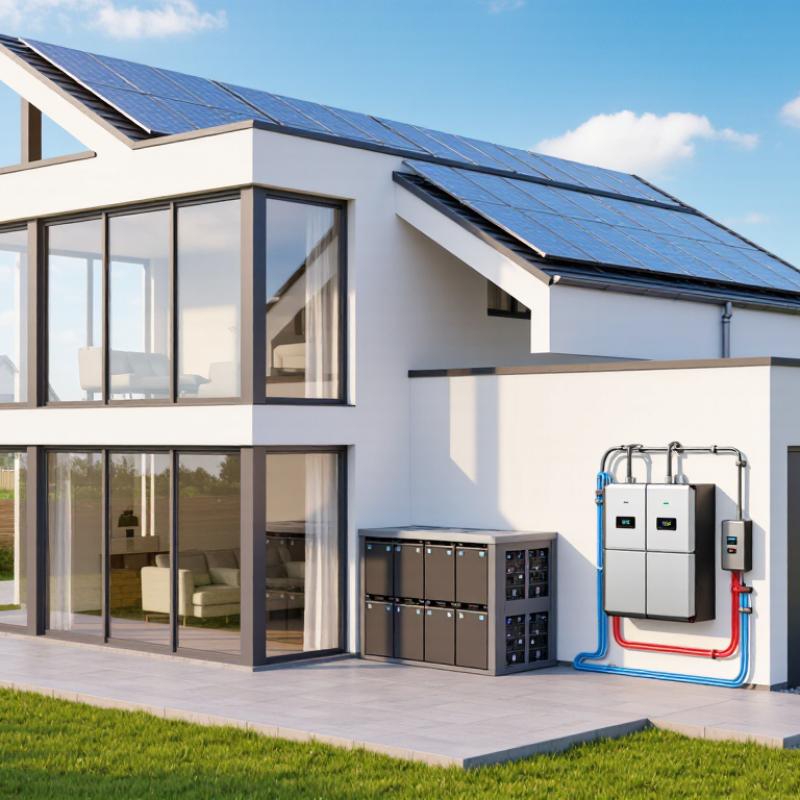
An all-in-one energy storage system combines a battery, inverter, battery-management controls, and related components in one coordinated unit. Instead of assembling separate boxes and wiring them together, a homeowner or installer works with a more integrated system. The battery stores electricity; the inverter converts it between the forms used by batteries and household circuits. The controls monitor charging, temperature, and system operation. One enclosure. Fewer separate pieces.
The system can store energy from rooftop solar or, where configured, the grid, then supply selected household loads when needed. For example, it might keep a refrigerator, lights, and a router running during an outage, depending on its capacity and wiring. “All-in-one” does not mean every installation is identical. Some units need additional equipment, and available backup power depends on the inverter, battery size, and electrical setup.
Good sizing starts with actual use, not just a large number on a product sheet. Check both energy capacity, measured in kilowatt-hours, and continuous power, measured in kilowatts. A system may store plenty of energy yet struggle to start a pump or other demanding appliance. That detail is easy to miss. Installation conditions matter, too: a hot, poorly ventilated utility room can affect performance and equipment life. The category name sounds precise, but its exact contents vary, so compare specifications and ask what is included.
An all-in-one energy storage system brings several working parts into one coordinated unit. The battery modules store electricity, often in stacked cells inside a protected enclosure. Their chemistry, capacity, and operating limits affect usable energy and service life. A battery management system monitors cell voltage, temperature, and charge levels. It can reduce charging or output when readings move beyond safe limits. Small details matter. A loose sensor connection, for example, can make readings less reliable.
The inverter, sometimes called a power conversion system, changes battery electricity into the form used by household appliances or a connected electrical system. An energy management system decides when to charge, discharge, or hold energy, using settings and available inputs such as solar production. Thermal controls help keep components within their specified temperature range, while fuses, contactors, and other protective devices interrupt certain fault conditions.
The enclosure also needs suitable insulation, ventilation, and access for inspection. Monitoring software can show power flow, battery state, and alerts, though its readings depend on accurate sensors and setup. “All in one” can overpromise: some units still require separate wiring, metering, or external backup equipment. Check the component list and installation requirements, not just the label.
An all-in-one energy storage system combines a battery, inverter, and control electronics in one coordinated unit. Solar panels produce direct-current electricity, which the system can route to the battery or convert into alternating current for household appliances. A control system monitors production, battery charge, and demand, then adjusts where energy flows. It is the traffic controller, not a source of power.
On a sunny afternoon, excess solar energy may charge the battery while a refrigerator and lights draw power. After sunset, the inverter converts stored electricity into the form those appliances use. If the battery reaches its reserve limit, the system may draw from the grid, depending on its configuration. Some setups can also provide backup power during an outage, but only for selected circuits and within the system’s output limits.
Battery capacity and inverter power are different measurements. Capacity affects how long stored energy can last; inverter power affects how many devices can run at once. A kettle and a refrigerator can create a brief, heavy demand. That detail matters. Real usage rarely matches a neat estimate, and installation conditions can change performance. Heat, shade on solar panels, and battery age all have an effect. An all-in-one design can simplify wiring, but it does not make every system fit every home. The load plan deserves a second look.
Illustrative 24-hour home energy profile for a system with a 10 kWh usable battery and a 5 kW inverter. Values are an example, not a product specification.
How it works: Solar panels produce electricity during daylight. The integrated inverter and controls supply the home and send surplus energy to the battery, where it is stored as DC electricity. When solar production falls, the battery discharges through the inverter to provide AC power to household loads.
Choosing a 2026 all-in-one energy storage system starts with matching its usable capacity and output power to real household loads. A 10-kilowatt-hour battery may cover evening use, but not necessarily an electric vehicle charger and heat pump running together. Scale matters. The International Energy Agency’s Batteries and Secure Energy Transitions report says global battery storage additions reached 42 gigawatts in 2023, more than double the previous year. That growth makes clear specifications more important, not less.
Compare round-trip efficiency, backup capability, operating temperature range, warranty terms, and expansion limits. The U.S. Department of Energy’s 2022 Grid Energy Storage Technology Cost and Performance Assessment uses 85% round-trip efficiency as a reference assumption for lithium-ion systems. Treat that as a benchmark, not a promise: product figures may use different test conditions, and whole-system performance can differ from cell-level results. Ask whether quoted capacity is usable, and whether backup power supports the circuits you actually need.
Installation details deserve equal scrutiny. Check inverter output, monitoring functions, noise, floor space, and compatibility with existing solar equipment. A compact cabinet beside the electrical panel sounds convenient, until service clearance or ventilation becomes an issue. Numbers need context. One weak point in many comparisons is the missing detail on performance during prolonged outages. Request documented test conditions and service procedures before deciding.
When choosing an all-in-one energy storage system in 2026, begin with your actual needs, not the largest capacity on the shelf. List essential loads: a refrigerator, lights, internet equipment, or a medical device. Check each appliance’s running and startup power. Then estimate how many hours you need backup. Power describes what the system can run at once; capacity describes how long it may run. They are not interchangeable.
Consider how the system will recharge. Solar input, grid charging, and generator compatibility vary by model, so check the specifications against your setup. Look at usable capacity, continuous output, battery chemistry, operating temperature range, and warranty terms. If the unit will sit in a garage, summer heat and winter cold matter. Ask a qualified installer to review wiring, ventilation, and service access. One detail people often miss: future expansion may require compatible batteries or controls. I would check that twice.
Tips: Compare usable capacity, not just the headline number. Ask for estimated runtime using your own loads. Keep some capacity in reserve; real usage rarely matches a perfect spreadsheet. Check maintenance and replacement options, too. A smaller system that fits your routine may be more practical than an oversized one.
It combines a battery, inverter, monitoring controls, and protective components in one coordinated unit. It can store solar energy or grid electricity, when configured. Fewer separate boxes.
Common parts include battery modules, an inverter, battery-management controls, thermal controls, and safety devices. Monitoring software may show battery level and power flow. The exact contents vary.
Not always. Some installations still need separate wiring, meters, or backup equipment. Check the component list and installation requirements, not just the product label.
List essential appliances, such as a refrigerator, lights, and a router. Check their running and startup power, then estimate how many hours you need backup. Real usage can be messy.
Power, measured in kilowatts, describes what the system can run at once. Capacity, measured in kilowatt-hours, describes stored energy. They are not interchangeable. Easy to miss.
Depending on capacity and wiring, it may power selected loads like a refrigerator, lights, or internet equipment during an outage. A demanding pump may exceed its output.
Check the temperature range, ventilation, wiring, and access for inspection. A hot, poorly ventilated utility room can affect performance and equipment life. I would check that twice.
Compare usable capacity, continuous output, charging options, battery chemistry, warranty terms, and replacement options. Ask for runtime estimates based on your own appliances. Keep some capacity in reserve.
An All-in-One Energy Storage System combines the key equipment for storing and managing electricity in a coordinated setup. Depending on its design, it may include a battery, an inverter, a battery management system, and monitoring and control functions. The battery stores energy, while the inverter helps convert electricity into a form suitable for household use or compatible equipment. Controls coordinate charging, discharging, and power delivery according to the system’s settings and available energy.
To compare systems in 2026, consider usable storage capacity, power output, efficiency, safety features, expected service life, expandability, monitoring tools, and compatibility with your existing electrical setup. The right choice depends on how much energy you use, which devices you want to support, your available installation space, and whether you need backup power. Evaluate the system as a whole, including installation requirements and ongoing support, rather than choosing by capacity alone.