Choosing a China Top LiFePO4 Energy Storage Container Manufacturer requires more than comparing prices or factory photographs. The real question is whether the supplier can deliver safe, traceable, and serviceable systems. A dependable LiFePO4 Energy Storage Container should combine certified battery cells, a stable battery management system, thermal monitoring, fire protection, and clearly documented operating limits. It should also perform reliably in heat, dust, humidity, and frequent charge-discharge cycles.
John B. Goodenough, a pioneer of modern lithium-ion batteries, said, “A battery is a device that converts chemical energy directly into electrical energy.” His words remain practical here. The container is not merely a steel box filled with cells. It is an integrated energy system requiring electrical design, thermal control, software coordination, and disciplined maintenance. In a serious supplier evaluation, request cell traceability, factory test records, protection settings, warranty terms, and independent certification evidence. Ask how technicians respond when a module reports abnormal temperature at 2 a.m.
Small details matter. Look for clean cable routing, labeled disconnects, accessible filters, and readable alarms. Check whether the manufacturer provides remote monitoring and replacement procedures. A polished brochure cannot replace test data. Neither can a low quotation hide weak after-sales support.
No supplier is flawless. Even experienced manufacturers may overlook a site-specific issue, such as salt air near a coastal project or limited ventilation inside a crowded substation. That is why this article examines Chinese manufacturers through evidence, engineering capability, production experience, and customer support. The strongest choice is not always the largest factory. It is the partner that explains risks clearly, documents its limits, and keeps improving after delivery.
What Defines a Top China LiFePO4 Energy Storage Container Manufacturer?
China Top LiFePO4 Energy Storage Container Manufacturer?
What Defines a Top China LiFePO4 Energy Storage Container Manufacturer?
A top manufacturer is defined by engineering discipline, not production volume alone. The IEA reported that utility-scale battery storage additions grew by about 130% in 2023. This growth increases pressure on suppliers to deliver safer, longer-lasting systems. A reliable container should show cell traceability, thermal-runaway testing, fire detection, and controlled ventilation. Safety is measurable.
LiFePO4 chemistry offers strong thermal stability and frequent cycling, but chemistry alone cannot guarantee performance. Lazard’s 2024 Levelized Cost of Storage analysis places lithium-ion round-trip efficiency broadly in the mid-80s to mid-90s, depending on system design. A capable manufacturer should publish measured efficiency, auxiliary consumption, degradation assumptions, and usable capacity. Vague cycle-life claims deserve questions. Data matters.
Site experience also separates serious manufacturers from catalogue sellers. Engineers should examine ambient temperatures, grid conditions, maintenance access, and emergency procedures before selecting a container. Factory acceptance tests should verify alarms, insulation, software controls, and inverter coordination. Independent testing under recognized standards adds credibility, especially when results are traceable to a specific production batch.
No datasheet is perfect. Some suppliers still present laboratory figures as field expectations. That gap needs more honest discussion. Buyers should request operating records, warranty exclusions, response-time commitments, and evidence from comparable projects. The strongest China-based manufacturer combines LiFePO4 expertise with documented quality control, transparent communication, and practical after-sales support. Not just cells.
Core LiFePO4 Specifications: 3.2V Cells, 280Ah Capacity, and 6,000 Cycles
China Top LiFePO4 Energy Storage Container Manufacturer?
For containerized storage, LiFePO4 chemistry offers a practical balance between safety, cost, and service life. Each cell typically provides a nominal 3.2V output. A 280Ah cell stores about 896Wh before system losses. That figure helps engineers estimate module size and container capacity.
A 6,000-cycle rating sounds impressive, but it needs context. The rating usually assumes controlled temperature, moderate charging, and defined depth of discharge. Real projects may achieve less. The IEA reported that global battery storage additions nearly tripled in 2023, reaching about 42GW. Its 2024 battery report also highlighted LFP’s growing role because of lower cost and reduced reliance on nickel and cobalt. These trends support large-scale deployment, but cell quality still varies. Testing matters more than a headline number.
Tips: Request cycle-test conditions, not only the cycle count. Check whether 6,000 cycles means 80% depth of discharge at 25°C. Review thermal management, balancing accuracy, enclosure protection, and warranty limits. A 280Ah cell is not automatically better. Poor connections can waste energy and create uneven heating. I have seen specifications look perfect on paper, yet installation details changed the outcome. That is worth reconsidering.
Container System Design: 20-Foot Units Reaching 5MWh with 95% Efficiency
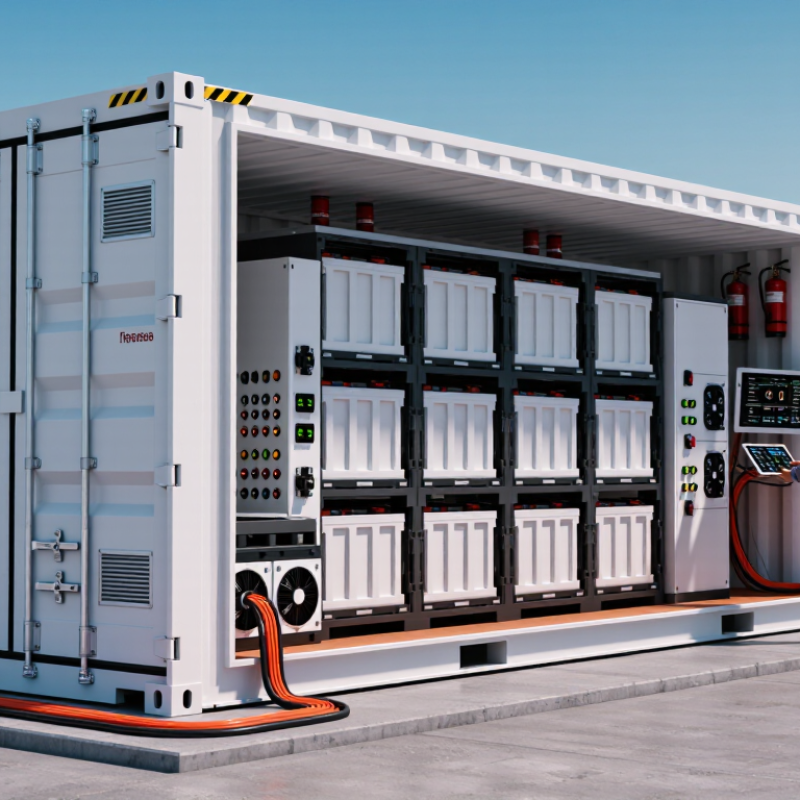
A 20-foot LiFePO4 energy storage container can approach 5MWh when cell packing, cooling, and auxiliary systems are engineered together. The number is impressive, but usable capacity depends on operating limits. High-density racks need controlled spacing, reliable busbars, and a battery management system that detects imbalance early. Keep temperatures stable. Liquid cooling can reduce local hot spots, while independent monitoring supports safer maintenance and longer service life.
A well-integrated container may achieve about 95% round-trip efficiency under defined test conditions. That result includes the battery, power conversion system, controls, and cooling loads. It should not be treated as a permanent field guarantee. During commissioning, engineers should compare meter readings at the grid connection and battery terminals. They should also review standby consumption, response time, alarm records, and performance at partial load. Small losses become visible there.
Practical design also considers transport weight, foundation loading, cable routing, fire detection, and emergency access. A 5MWh enclosure needs disciplined installation, not only a larger rack count. In my view, the weakest point is often site integration. A perfect factory test can still miss dust, humidity, uneven loading, or delayed controls. Designers should publish test conditions, warranty assumptions, degradation data, and maintenance intervals. Some figures remain uncertain. That honesty makes project comparisons more useful and purchasing decisions more reliable.
Safety and Compliance: UL 9540A, IEC 62619, IP55, and Thermal Control
China Top LiFePO4 Energy Storage Container Manufacturer?
For a China-based LiFePO4 energy storage container manufacturer, safety begins with evidence, not claims.
UL 9540A testing evaluates thermal runaway and fire propagation under controlled conditions. It helps engineers understand cell, module, and system behavior. IEC 62619 addresses industrial lithium battery safety, including protection against abnormal operation. Test reports should match the actual battery chemistry, enclosure design, and operating limits.
Details matter.
IP55 protection limits dust entry and water jets from every direction. It does not make the container waterproof. Sealed cable glands, drainage paths, and door compression should be checked during factory acceptance testing. Inside, thermal control needs more than air conditioning. Temperature sensors should cover battery racks, busbars, and hot zones. The control system must record alarms, isolate faults, and manage ventilation without creating new ignition risks.
Field experience shows that installation conditions can weaken good designs.
High humidity, uneven flooring, blocked airflow, or delayed maintenance may change performance. A checklist alone is not enough. Engineers should review thermal maps, emergency procedures, software settings, and maintenance access before shipment. One issue remains easy to miss: test conditions may not represent every project site. Independent verification and clear change control are still necessary.
How to Evaluate Chinese Manufacturers by Quality, Cost, and Global Service
China Top LiFePO4 Energy Storage Container Manufacturer?
How to Evaluate Chinese Manufacturers by Quality, Cost, and Global Service
Global battery storage additions reached about 42 GW in 2023, according to the International Energy Agency’s 2024 report. This growth increases demand for reliable LiFePO4 energy storage containers. However, a low quotation does not prove strong engineering. Cheap is not proof.
Evaluate cell traceability, pack consistency, thermal management, and container-level protection. Request third-party test records, factory acceptance procedures, and evidence of capacity testing under realistic temperatures. UL 9540A test data can help assess thermal runaway behavior, while IEC-based documentation supports wider technical review. The process should include visual inspection, insulation checks, communication testing, and emergency-stop verification. Missing records deserve attention.
Cost also needs a wider calculation. BloombergNEF reported an average lithium-ion battery pack price of 115 US dollars per kWh in 2024, but container pricing includes inverters, controls, fire systems, shipping, commissioning, and spare parts. Compare usable energy, cycle-life assumptions, warranty exclusions, and degradation limits. Ask who handles a failed sensor in another country. Local service partners, remote monitoring, multilingual manuals, and stocked replacement components can reduce downtime.
Experience matters here. A supplier should explain previous project conditions, not only show photographs. No factory is perfect. A small documentation gap may reveal a larger management weakness, though this judgment requires care. Check production audits, serial-number tracking, response times, and field references before signing. A technically strong container with weak support can become an expensive metal box.
FAQS
A typical cell provides 3.2 volts nominally. Actual voltage changes during charging and discharge.
A 3.2V, 280Ah cell stores about 896Wh before system losses. Wiring and conversion reduce usable energy.
No. The rating usually assumes controlled temperature, moderate charging, and a defined depth of discharge.Real conditions vary.
Request temperature, depth of discharge, charging rate, cutoff voltage, and remaining capacity after testing.A headline number can mislead.
Not always. Poor connections can waste energy and create uneven heating.Installation quality matters greatly.
Request test reports for thermal propagation and industrial battery safety.Reports should match the actual chemistry, enclosure, and operating limits.
No. IP55 limits dust entry and water jets from different directions.It is not waterproof.
Sensors should monitor battery racks, busbars, and potential hot zones.The control system should record alarms, isolate faults, and manage ventilation safely.
High humidity, uneven flooring, blocked airflow, and delayed maintenance can weaken performance.Small details matter.
Conclusion
A top China LiFePO4 Energy Storage Container manufacturer combines reliable battery technology, robust system integration, and consistent international support. Its products typically use 3.2V LiFePO4 cells with capacities around 280Ah, offering long service life of up to 6,000 cycles under suitable operating conditions. The manufacturer should also demonstrate strong quality control, traceable production, and clear technical documentation for large-scale energy storage applications.
A well-designed LiFePO4 Energy Storage Container can use a 20-foot enclosure to deliver up to 5MWh, while maintaining high system efficiency of approximately 95%. Safety is equally important, including thermal management, fire protection, IP55-rated enclosure performance, and testing aligned with standards such as UL 9540A and IEC 62619. When comparing Chinese manufacturers, buyers should assess product quality, total cost of ownership, customization capabilities, delivery reliability, warranty terms, and responsive service for overseas installation and maintenance.